(Image source from: Indiatoday.in)
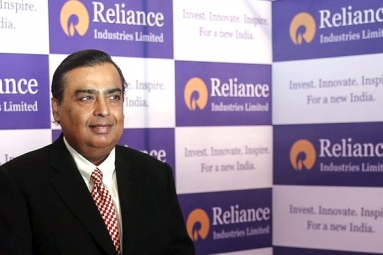
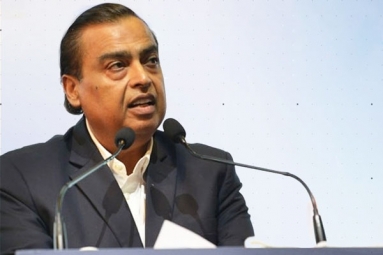
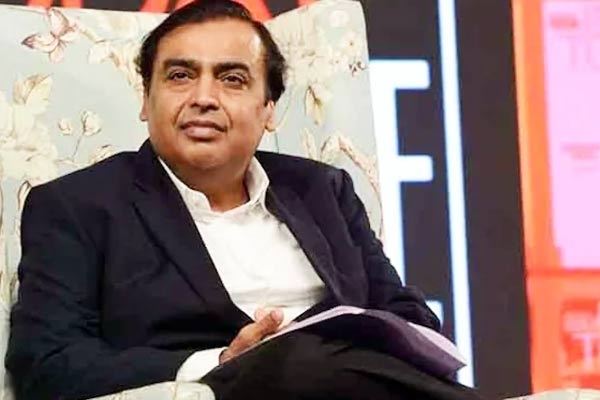
Billionaire business leader and chairman of Reliance Industries, Mukesh Ambani, has again opted not to take any salary from the company for the fiscal year 2026, continuing this choice for the sixth year in a row. Even though he leads one of the biggest corporate groups in India that includes oil, telecom, and retail sectors, Ambani has primarily relied on earnings from dividends instead of a salary. Ambani, who is the second-richest person in Asia, previously set his yearly pay at ₹15 crore from fiscal year 2009 to fiscal year 2020. However, starting in fiscal year 2021, he decided not to accept a salary because of the financial challenges brought on by the COVID-19 pandemic. According to the most recent annual report from Reliance Industries, he once again received no salary, benefits, perks, or retirement-related compensation in fiscal year 2026. This decision stems from June 2020, when Ambani stated he would voluntarily give up his pay due to the significant effects of the pandemic on India's economy, businesses, and society. He has maintained this position throughout fiscal years 2022, 2023, 2024, 2025, and now 2026.
This action is notable globally, especially when many high-paying executives often face backlash from investors and governance experts. In the meantime, Reliance Industries reported impressive financial results for fiscal year 2026, showing a consolidated net profit of ₹95,754 crore and achieving a market value of ₹18,19,103 crore, which is close to USD 192 billion. Even without a salary, Ambani continues to receive significant income through dividends. The billionaire, who ranks among the wealthiest people globally with a wealth estimated at nearly USD 100 billion, owns 1.61 crore shares in Reliance. Based on the company's dividend payout of ₹6 per share in fiscal year 2025, his direct dividend earnings were around ₹9.66 crore. Additionally, entities controlled by the Ambani family hold nearly 664.5 crore shares in Reliance Industries, making up 50.07 percent ownership. These shares brought in dividend income of about ₹3,987 crore.
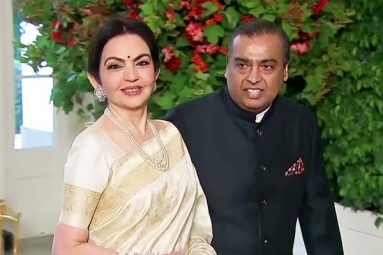
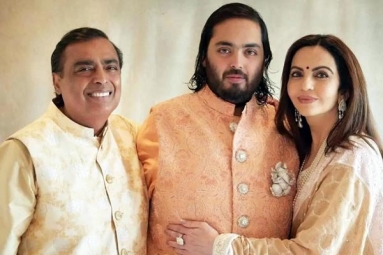
The annual report also discussed compensations for Ambani's cousins and senior executives. Nikhil Meswani and Hital Meswani each continued to earn ₹25 crore. Their compensation packages included ₹10 crore for salary and allowances, ₹44 lakh in retirement benefits, and nearly ₹14.56 crore as commission linked to profits. Executive Director P M S Prasad had his annual pay rise to ₹20.58 crore in fiscal year 2026, compared to ₹19.96 crore in the previous year. At the same time, Ambani's children — Akash Ambani, Isha Ambani, and Anant Ambani — stayed on the Reliance board after being appointed in October 2023, without fixed salaries. Akash and Isha each received ₹5 lakh as sitting fees along with commission earnings of ₹2.5 crore.
Anant Ambani, who became the executive director the previous year, made ₹12.17 crore in the fiscal year 2026, which includes a commission of ₹2.29 crore. The board of Reliance Industries has several well-known independent directors and global leaders, like former SBI chairperson Arundhati Bhattacharya, experienced banker K V Kamath, ex-Central Vigilance Commissioner K V Chowdary, Raminder Singh Gujral, Shumeet Banerji, and Yasir Othman H Al Rumayyan, who represents Saudi Arabia’s sovereign wealth fund. Independent directors were paid commissions of ₹2.5 crore each in FY26, which is an increase from ₹2.25 crore paid the previous year, along with their sitting fees. Mukesh Ambani has been part of Reliance Industries’ board since 1977 and became the chairman after the founder Dhirubhai Ambani passed away in 2002. In 2023, shareholders gave their approval for his reappointment as chairman and managing director for another five years, lasting until April 2029. During this period, Ambani has decided not to take any salary.
Since giving up his pay in 2020, Ambani has also not accepted allowances, stock options, commissions, or retirement benefits related to his leadership position. Before this, he had kept his salary at ₹15 crore for more than ten years, which the company called a sign of restraint in executive salaries. His pay for FY20 stayed the same as it had been set 11 years prior.