(Image source from: Financialexpress.com)
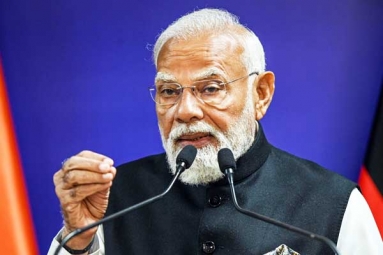
Prime Minister Narendra Modi is heading to the United Arab Emirates on May 15 during a challenging time for global fuel safety. The conflict between the US and Israel against Iran has disturbed shipping paths in the Middle East. The costs for insurance have risen. The shipping situation is uncertain. Oil traders are feeling uneasy. The Strait of Hormuz, which is the most vital oil passage in the world, is being closely monitored. Any disruption here quickly impacts fuel prices, inflation, and the financial balance since India brings in over 85 percent of its crude oil. This sets the scene for PM Modi's quick visit to Abu Dhabi to speak with UAE President Sheikh Mohamed bin Zayed Al Nahyan. Thus, it is likely that energy will be a key topic during their discussions. However, the focus will include not only immediate supplies. The dialogue will likely revolve around long-term contracts for crude oil and LNG, along with strategies to boost India's strategic oil reserves with help from the UAE. India has three strategic oil storage locations with a total capacity of 5.33 million metric tons. Plans are in place for two additional sites with another capacity of 6.5 million metric tons. Some of the current storage is already rented to the Abu Dhabi National Oil Company. New agreements could enhance this approach.
Experts anticipate that India will advocate for:
Guaranteed long-term crude oil supplies
Increased LNG deliveries for cooking gas security
UAE involvement in enhancing India's oil storage capacity
Flexible supply agreements if shipping routes are affected.
The UAE's recent withdrawal from OPEC allows it more freedom to increase production. This makes it a dependable supplier when others might be limited. In January, India finalized a $3 billion LNG agreement with the UAE. This trip may build upon that. Importantly, India and the UAE established the India-UAE Comprehensive Economic Partnership Agreement in 2022. Trade has seen significant growth since then. The UAE now ranks as India’s third-largest trading partner. The goal for bilateral trade is to reach $200 billion in the upcoming years.
Discussions will evaluate the CEPA's progress and explore new opportunities in:
Investment in infrastructure
Clean energy and transportation
Food supply chains and essential goods
Cooperation in defense and cybersecurity.
What was once just a basic buyer-seller oil interaction is evolving into an energy and investment partnership.
A substantial portion of India's oil and gas shipments go through Hormuz. Any threats in that area lead to:
Longer shipping routes
Increased freight and insurance costs
Delays in cargo deliveries
Immediate pressure on local fuel prices.
Both nations are expected to address maritime security and ensure seamless trade through this passage. Additionally, over 4.5 million Indians reside in the UAE, working in various fields. They also contribute to some of the largest remittance flows back to India. This personal connection strengthens the ties between the two countries. Stability in the UAE has a direct impact on Indian families and foreign exchange flows in India.
Abhinav Munshi, the Managing Partner at Razor Capital, mentions that the trip happens at a "very important time" since the conflict in the Middle East is interfering with shipping paths, energy supplies, and even the trade of food and chemicals. He highlights that this is the second direct meeting between the two leaders in less than five months. This shows there is a sense of urgency. Munshi emphasizes that the UAE has increased its portion in India's oil imports from less than 5 percent in 2021 to almost 10 percent by 2025. Additionally, it has become the second biggest supplier of LNG to India. He believes the relationship is evolving from just a supplier and customer to a true energy partnership, where both parties work together on infrastructure along the corridor. Regarding trade, he states that CEPA has already led to merchandise trade exceeding $100 billion by 2025, which is well ahead of previous goals.
Concerning investment, Munshi points out that UAE organizations have put more than $25 billion into India, with $16 billion arriving in just the past five years. Considering the scale of UAE sovereign funds, he anticipates that this amount could increase significantly over the next ten years. He also emphasizes the importance of remittances, which will reach $26 billion from Indians in the UAE by 2025, contributing significantly to offsetting India's trade deficit.